
I’m currently studying Brené Brown’s The Gifts of Imperfection with a wonderful group of women as part of The Self-help Bookshelf, a weekly book club facilitated by therapist Emma Kenmuir in Heanor, Derbyshire. (See ‘@_therapywithemma_’ on Instagram).
This work has stirred something in me. A reminder of how much strength it takes to show up as my whole, imperfect, authentic self. Not just in theory, but in real everyday life. Not just fitting in to please others (a habit I’ve spent a lifetime unlearning). But truly being seen, warts and all, and being fine in myself if some people don’t accept that version of me.
I’ve been offline for a while. A necessary pause. A time of soul-searching, and asking some deep questions. Stripping things back and sitting quietly asking myself: What still feels true and right? What needs rebuilding? What is no longer mine to carry? What needs to stay, and what’s it time to let go of?
And this week, I found myself circling a question I didn’t expect to be asking:
Do I even still want to do batik?
It’s been over seven years since I launched Attic Batik, and in that time, so much has shifted — in my art, my business, my beliefs, and in me.
There have been moments of passion and flow, and also seasons of doubt, burnout, or drifting away. I’ve changed. The world’s changed. And I think it’s only natural that I’d begin questioning whether this path still fits where I’m at.
But Brené’s words from her book landed with impact and made me realise why this craft still matters to me.
Batik, much like life, is unpredictable. It’s messy. It requires surrender and trusting the process. It doesn’t care much for perfectionism — in fact, it challenges it. And I realised that’s exactly why it calls me back.
It teaches me to adapt when hot wax accidentally spills over my work, because in batik mistakes cannot be erased. I have to make peace with a misplaced blotch or figure out ways to adapt to it. I learn to see the beauty in the unplanned and how to embrace ‘happy’ accidents. And I come to appreciate the transformation which is often slow, hidden beneath many layers of muddy wax where the true development is not yet apparent.
Acceptance is built into the process — the letting go of controlling every detail, as things will not always go as planned or as imagined in batik. I can never fully predict the outcome and there is always an element of surprise.
My students will tell you: the most magical moment in any batik class is that final reveal. That moment when all the wax is removed, and what was hidden beneath is suddenly now clear. Now luminous, surprising, and often more beautiful than imagined.
To me, batik always feels like a metaphor for life itself, and still motivates me to play and test out the limits of a medium that resists perfection, and invites patience. And that’s exactly why it’s still meaningful to me.
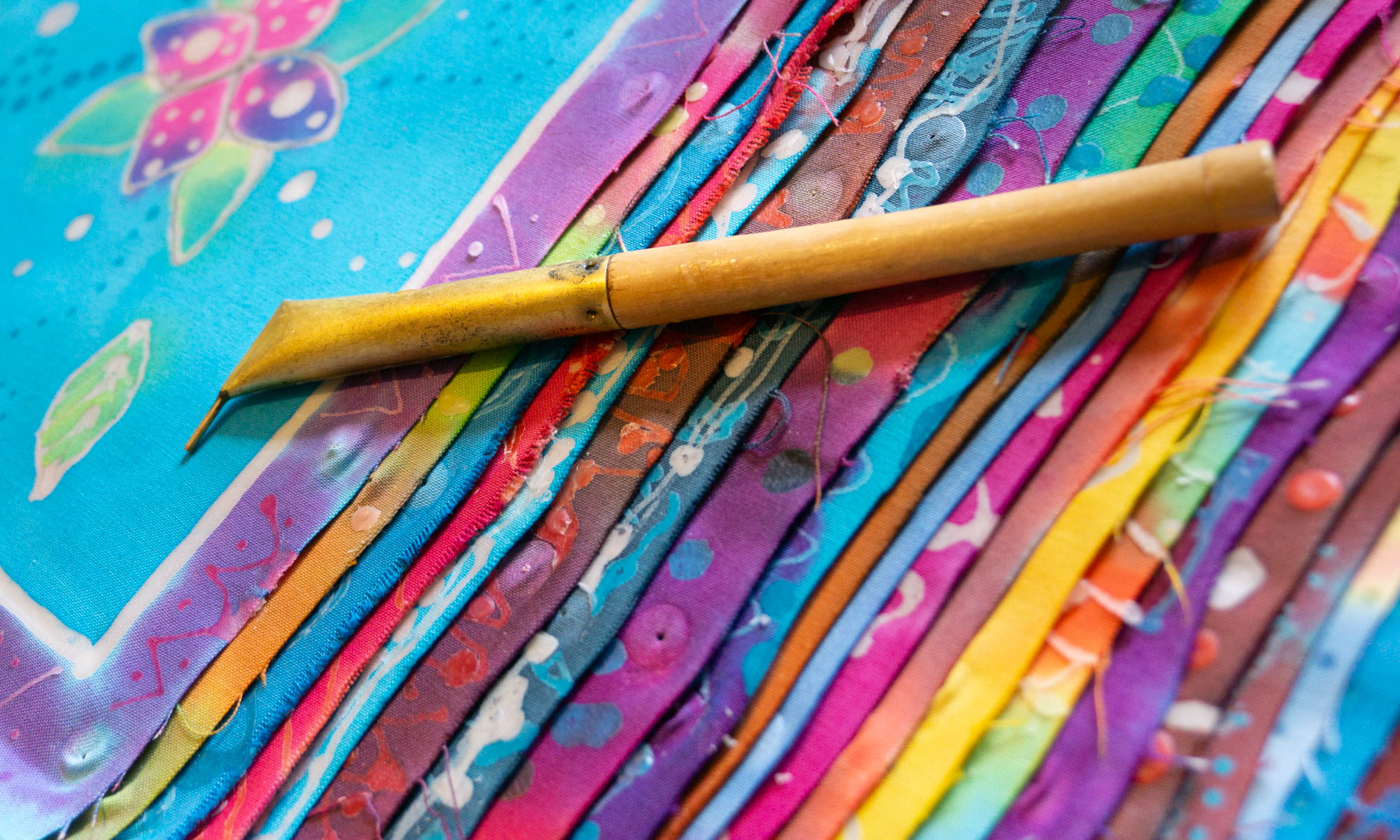
So yes, I’m still here. Still holding a tjanting tool and emerging from the darkness with a little more clarity and light, still with a fondness for what this craft continues to teach me.
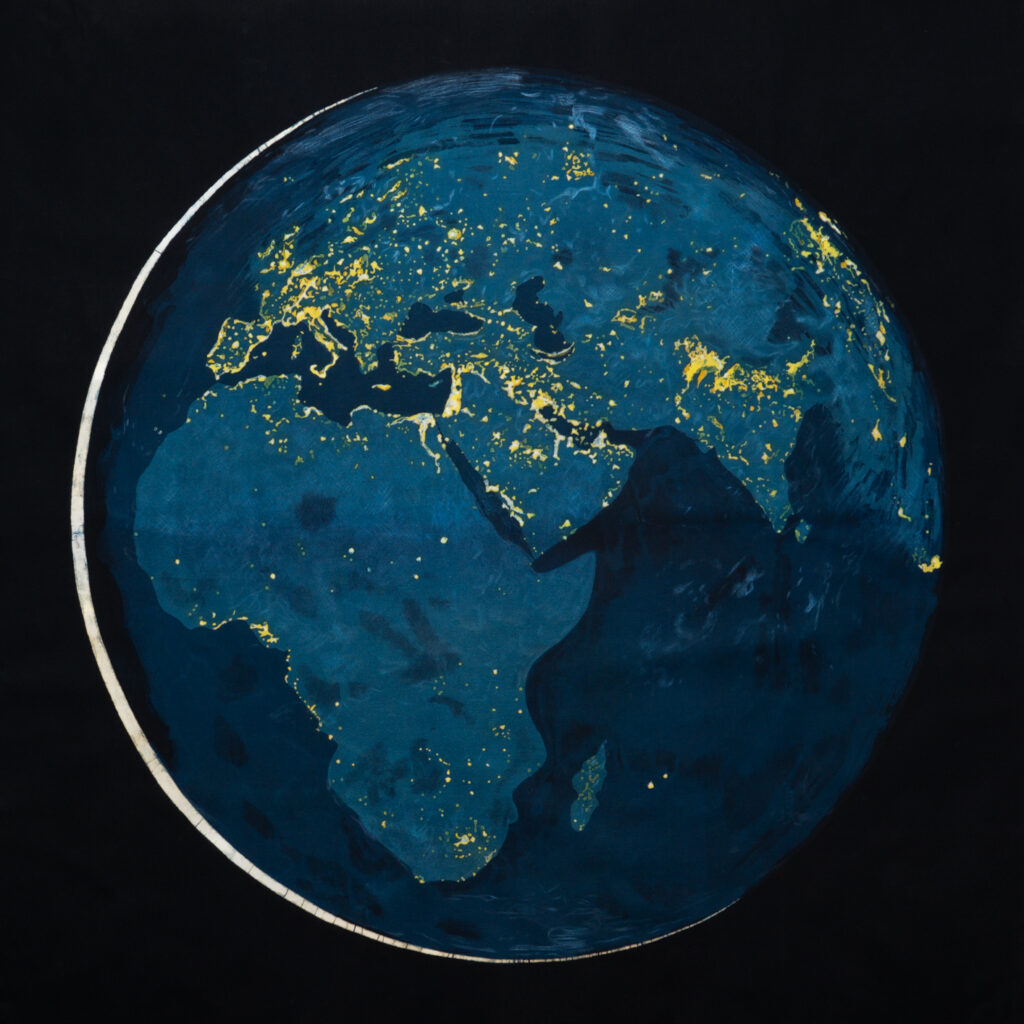
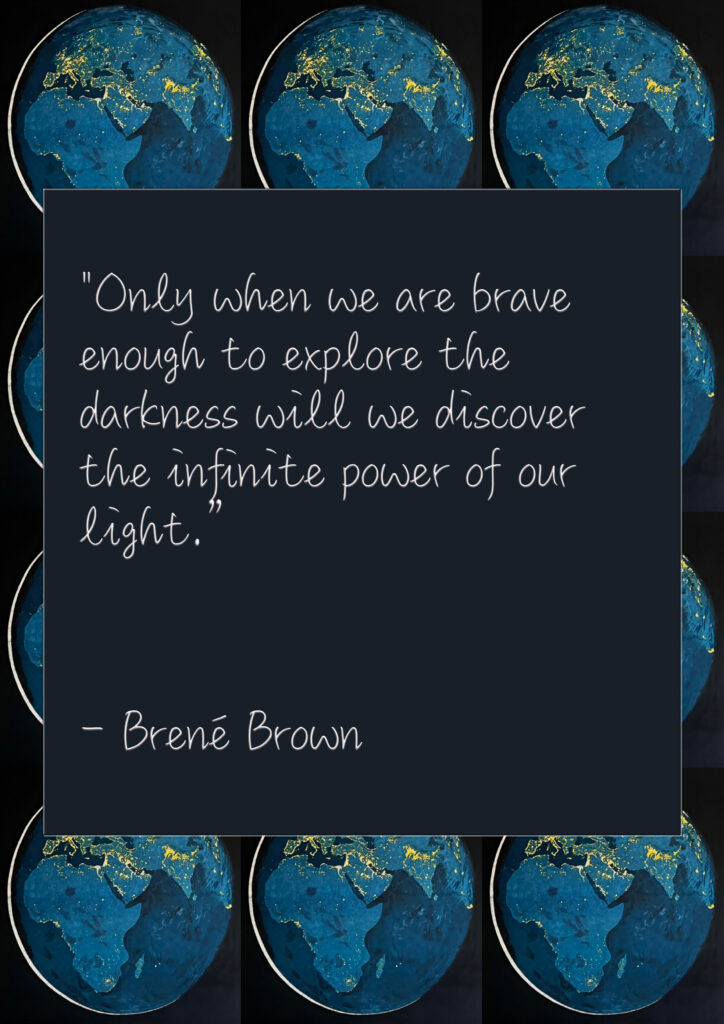
The image behind Brené’s quote (as shared on my socials) is a tiled version of my batik painting ‘Illuminated Earth at Night’. It’s a piece that hints at a new day beginning, with light gently creeping in to replace the darkness.
If you’re on a similar path of asking hard questions and re-evaluating what’s still right for you, of learning how to show up honestly and imperfectly, then welcome. You’re in good company here.
🌅
Sue x